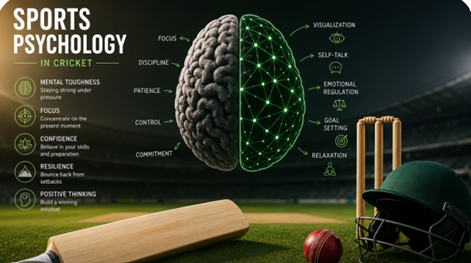
Sports Psychology Takes Centre Stage in Modern Cricket
Playing the sport of cricket can have a very significant psychological impact on how cricketers perform. We have learned this from two very able cricketers how they handle their mental health and the pressure put on them in high stakes. Most players think that the psychological part of cricket doesn’t matter as much. Recently players like Ben Stokes have been kicked off the England test team as they went to have a drink after performing badly. This shows that even the top players can make psychological mistakes.
Last Tuesday, Harry T and Henry M interviewed semi-pro cricketer and owner of Cricket School of Excellence about his views on this subject. They asked him how important is the psychological aspect compared to physical skill in cricket. Chris, the owner of the cricket academy, said, ‘Cricket is 10% skill and 90% mental.” This shows that even some of the best players may not be good at cricket but are very strong in their mind. Furthermore, Luke Sutcliffe, a teacher at The Beacon school shared his views on the subject, ‘I sit in the same spot in the changing rooms for every match I play.’ This shows that he likes to keep his matchdays the same so that this consistency helps him maintain his mindset and performance.
Most cricket players are mentally impacted by the game’s isolation and the weight of individual expectations in a team environment, and the intolerance of failure. These factors combined with nonstop noise in the crowd trying to distract them may result in them making a mistake. Also, the relentless sledging from the opposite team also contributes in negatively impacting their mental state. Chris also said in the interview ‘I think sledging should be allowed to a limit, but there’s a fine line between banter and it being personal’ This shows that sledging can be humorous but can also get quite personal and rude.
Studies on pro cricketers show that higher self-confidence is associated with better performance, while high anxiety is linked to poorer decision-making and execution. A recent study with county cricketers compared individualized pressure-training programs against generic training. Players receiving tailored psychological interventions performed significantly better in T20 and 50-over cricket.
Similarly, clear communication is particularly important during high-pressure situations. For example, batters must call loudly and confidently when deciding whether to run between the wickets, as poor communication can lead to confusion and unnecessary runouts. Similarly, bowlers and captains regularly discuss tactics to decide how best to dismiss a batter, while fielders communicate about positioning and potential catches.
One can surely learn a few tips from Chris Marrow about how to stay pressure free in a high-pressure game. Things like “chewing gum,” and a very important lesson, to do your preparation in the nets and in practice because if you have done all the hard work in your practice then you just need to focus on the match.
Reported by Henry M and Harry T