
Europe's North Korea: Life in Communist Albania
Communism: the marmite of the political world. Albania, is an often-forgotten communist state. From 1944 to 1990 Albania had some of the darkest chapters in its history. The communist regime was led by the notorious dictator Enver Hoxha who was a firm believer of communism as it brought power to himself but as it also developed the country. But what was it like for someone who lived through those dark ages?
Religion
Enver Hoxha’s attack on religion was one of the darkest pages of his communist regime. Albania was actually the first ever atheist state in the world because of him. During his regime, 40 catholic priests were executed or died in prison. Initially, he restricted access to places of worship like churches and mosques, ultimately banning any exercise of religion. Hoxha knew that religion had deep roots within society. As shown in a letter written by him stating ‘to be cautious, but ruthless, as religion is very influential among people’. For example, The Great Cathedral of Shkodra became an indoor sports arena because of Enver Hoxha. It was clear to say that he despised religion, and it was totally not allowed.
Healthcare
I asked Sela H, who was a pharmacist during communism. He was asked about what the healthcare was like during the communist regime. He said that “Healthcare was free. Medicines for children from 0-1 year old were free. Vaccinations of children were done in schools for every age. Hospitals had the perfect service for doctors. Everything was controlled, medicines were not given without a doctors, and prescriptions were not allowed. Every city had its own hospitals with specialists in every field regardless of the time. Now, if you don’t pay for your medicine, you died.” Based on the answer that Sela gave, the healthcare was top-notch.
Public Transport
In 1948, they opened their first train from Tirana to Durres. In the south of Albania the transport infrastructure was more developed than in the north. Up in the north, some villages could only get to the city or town by walking in order to access healthcare or any other services. After a while the whole of Albania was linked by rail and bus services. But there was no private transport. It is safe to say that the transport was still developing.
The Sigurimi
The Sigurimi was an intelligence agency for Albania that worked for Enver Hoxha. Their primary goal was to keep Enver Hoxha in power. It was also used to identify and root out enemies of the state form within and out. The Service was integrated within the population as far as 1 in 3 people working for it.
Restrictions
During the communist regime, the people of Albania had many restrictions, pushes by Enver Hoxha.
- There was no freedom of speech
- It was forbidden to read foreign books
- It was strictly forbidden to listen to foreign music
- Not allowed to wear revealing/extravagant clothes
- Men not allowed long hair
- Not allowed to cross the border or meet any one from other nationalities
- If you did not obey the communist laws, you would be sent to prison
Positives
But it was not all bad, there was no chance that a child would be absent or not go to school at all. There were no beggars on the streets. Before communism, roughly 85-89% of Albania was illiterate. After communism, the literacy rate went over 90%. State supplied houses for everyone.
A statement by Enver Hoxha sums up what he wanted: “Set up prisons and concentration camps and imprison all those charged with serious offences, high treason and open collaboration. Do not show mercy to anyone who collaborated with the occupiers; execute them on the spot. Assemble all prisoners in concentration camps; try to avoid such actions will frighten people. Be careful. Stop, arrest and execute influential individuals, make them an example for others. This is sure to have an impact on the people.”
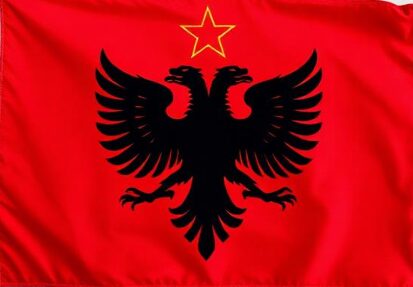
Overall, there have been some positives and some negatives for Albania during communism.
Reported by Emilio T